






















State Grid Fujian Power Grid Distribution Automation System
Industrial communication links support distributed feeder automation and centralized power grid management.
Project Value

Enhancing Network Reliability
The network above the aggregation layer meets N-1 redundancy requirements, strengthening the redundancy of the distribution communication network.

Supporting Distribution Automation
Carries "three-remote" service data and provides reliable communications for timely transmission of control commands.

Adapting to Diverse Deployment Scenarios
Flexible selection of network topologies according to different distribution sites improves network deployment adaptability.

Enhancing Network Management Capabilities
Mature industrial communication technologies improve centralized network management, operation, and maintenance capabilities.
Case Highlights
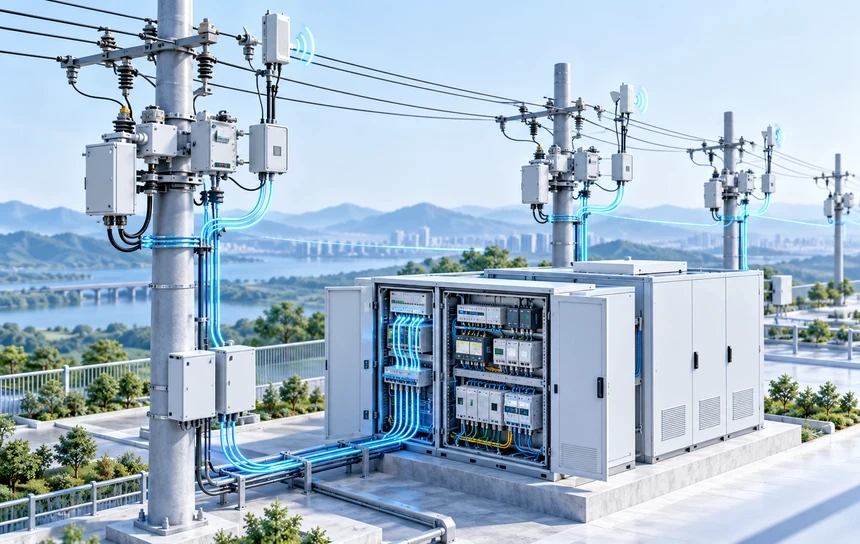
Project Background
As the development of new power systems continues, distribution networks are required to further improve their capabilities in renewable energy integration, power supply reliability, and operational control. This creates higher demands for grid visibility, measurement, regulation, and control. As a critical infrastructure component of distribution automation systems, the communication network must evolve accordingly in terms of reliability and network management capabilities.
Project Requirements
Following the principle of integrated transmission and distribution networks, a city-level dedicated fiber-optic communication network for distribution systems is constructed, with Layer 2 or Layer 3 network architectures selected according to actual service requirements.
The aggregation layer is primarily deployed at 220 kV and below substations, dispatch centers, and other sites. A ring topology is adopted to meet N-1 redundancy requirements. The access layer is deployed at switching stations, ring main units, distribution rooms, and other sites, using ring, daisy-chain, or hand-in-hand topologies according to site conditions. The network carries distribution automation "three-remote" services and electricity consumption data.
Solution
A dedicated fiber-optic communication network for distribution systems is constructed through a hierarchical network architecture:
The aggregation layer adopts a ring topology for centralized aggregation of regional services;
The access layer flexibly adopts ring, daisy-chain, or hand-in-hand topologies according to site conditions;
Industrial-grade networking equipment carries distribution automation and electricity consumption data;
The overall network is designed in accordance with the N-1 redundancy principle, providing communication channels for data exchange between the distribution control center and field terminals.
Recommended Cases
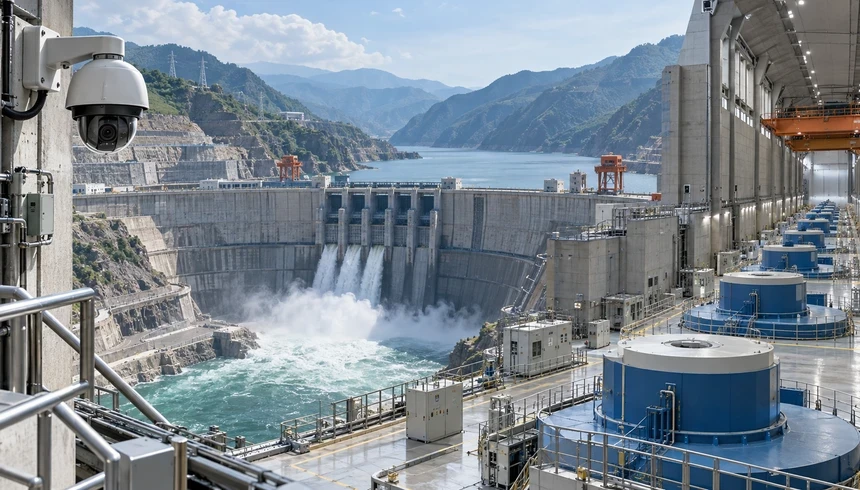
Baihetan Hydropower Station — Auxiliary Control Video Surveillance and Energy Metering Data Acquisition Systems
Industrial networking connects hydropower video surveillance and energy metering data acquisition.


Tingzikou Hydropower Station — 5G Intelligent Inspection System
Industrial wireless communication supports intelligent inspection at a hydropower station.
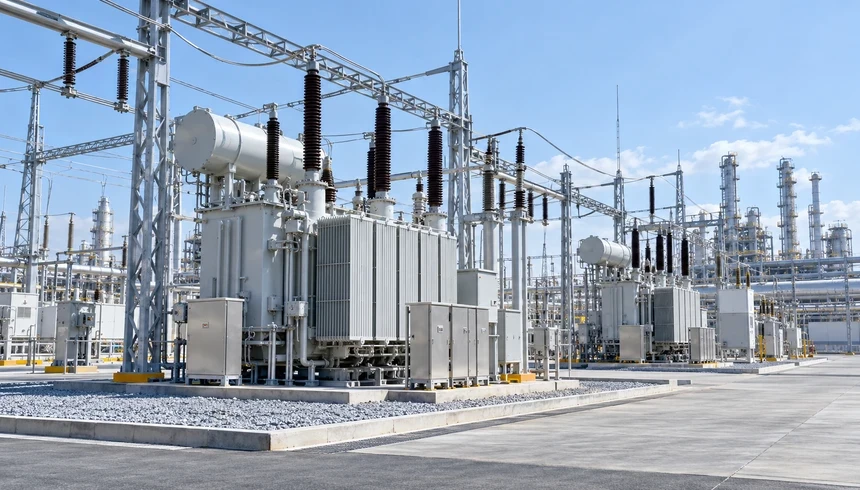
Sinopec Maoming Petrochemical 220 kV Substation
Reliable industrial networking supports protection, control and monitoring in a high-voltage substation.

Huaihe Energy Group Panji Power Plant Phase I — 2 × 660 MW Project
Redundant industrial communication supports field data acquisition and distributed power plant control.
Make an appointment with an expert to receive a free assessment of your industrial network needs