




















Wireless Communication for the Intelligent Remote Monitoring System of Port Cranes at Nantong Port
Industrial wireless links maintain remote video and monitoring connectivity as port cranes rotate.
Project Value

Improve Wireless Stability in Rotating Applications
Multi-directional wireless client deployment reduces communication fluctuations caused by metal obstruction and changing equipment orientation during crane rotation.

Enable Reliable Remote Video Monitoring
Stable transmission of crane operation videos to the monitoring center provides visual oversight of port operations.

Support Long-Distance Wireless Communications
Meets data transmission requirements for port crane equipment located 350–550 meters from the monitoring center.

Simplify On-Site Deployment
PoE power supply and wireless backhaul reduce the complexity of cabling for mobile port equipment.
Case Highlights
Project Background
Port cranes at Nantong Port operate frequently, requiring real-time monitoring of lifting operations and transmission of operation videos to the management center for centralized visualization and video recording.
The project covers seven pedestal cranes, two gantry cranes, and other crane equipment. The pedestal cranes are approximately 450–550 meters from the monitoring center, while the gantry cranes are approximately 350 meters away.
Project Requirements
Continuous Crane Rotation: During 360° rotation of pedestal cranes, conventional wireless antennas can be affected by metal structures and changes in antenna orientation, resulting in signal obstruction and fluctuations.
Wireless Link Stability: Frequent equipment movement and simultaneous access by multiple nodes place high demands on wireless communication stability.
Long-Distance Transmission: Stable transmission of high-definition video and other operational data is required across distances of several hundred meters between the cranes and monitoring center.
Reduced On-Site Cabling: The large operating range of port equipment calls for a more flexible wireless communication solution.
Solution
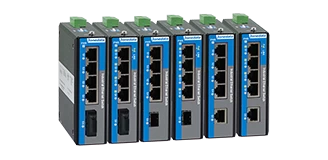
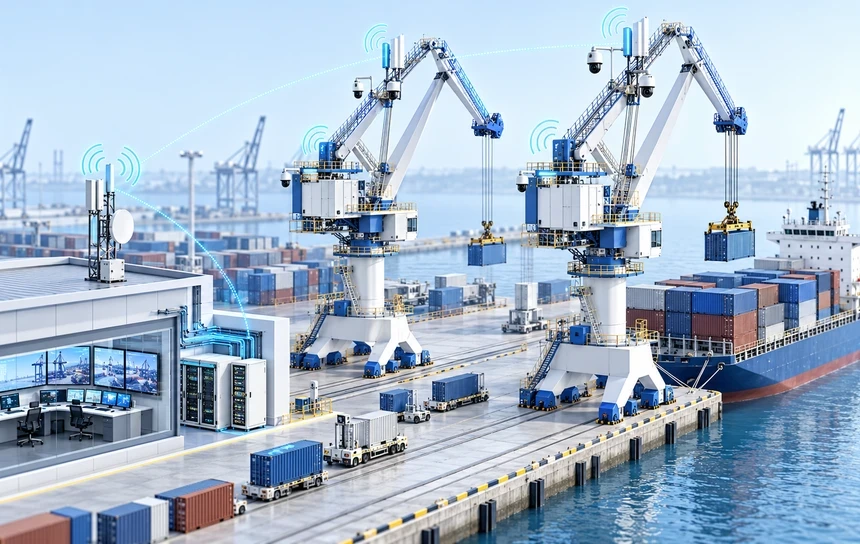
Cameras installed inside the cranes are powered and connected through PoE switches. IAP2300C wireless devices are deployed as clients to transmit video and other operational data from the cranes to the ground network over wireless links.
For the 360° crane rotation scenario, wireless clients are deployed in multiple directions to mitigate potential signal obstruction caused by changes in equipment orientation and metal structures during rotation, thereby improving wireless link continuity.
Recommended Cases

Toll Stations, Malaysia
Industrial connectivity supports electronic payment, traffic sensing and reliable tolling operations.


El Carrizo Bridge, Mexico
Secure industrial networking connects distributed bridge sensors for structural condition monitoring.

Integrated Monitoring System for Xishui Sightseeing Light Rail
Industrial networking connects onboard and wayside systems for mountainous sightseeing light rail.

Remote Control of RTG Cranes at Beilun No. 1 Container Terminal, Ningbo-Zhoushan Port
Wired and wireless industrial networks support remote control of container terminal RTG cranes.
Make an appointment with an expert to receive a free assessment of your industrial network needs