











Integrated Automation System for Traction Substations on the Beijing–Shanghai High-Speed Railway
Redundant industrial communication supports protection, control and SCADA across railway traction substations.
Project Value

Support Critical Traction Power Services
Provides communication infrastructure for protection and control, four-remote services, fault information, SCADA dispatching, and other applications within traction substation automation systems.
Enhance Network Redundancy
The SW-Ring architecture improves link reliability and reduces the impact of individual link failures on critical service communications.
Meet Time Synchronization Requirements for Power Applications
IEEE 1588v2 hardware-based time synchronization provides precise time synchronization for relevant power services.

Adapt to Traction Substation Environments
Industrial-grade Ethernet switches are designed for demanding operating conditions, including strong electromagnetic interference, supporting reliable long-term operation in traction substations.

Support Large-Scale Railway Deployment
With 122 switches deployed, the project establishes a consistent equipment and network architecture, providing large-scale deployment experience for communication networks in high-speed railway traction substations.
Case Highlights
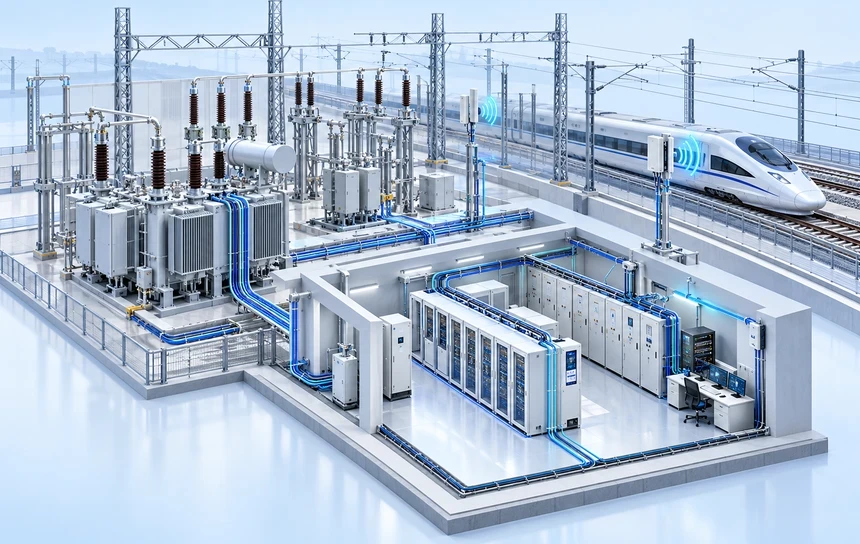
Project Background
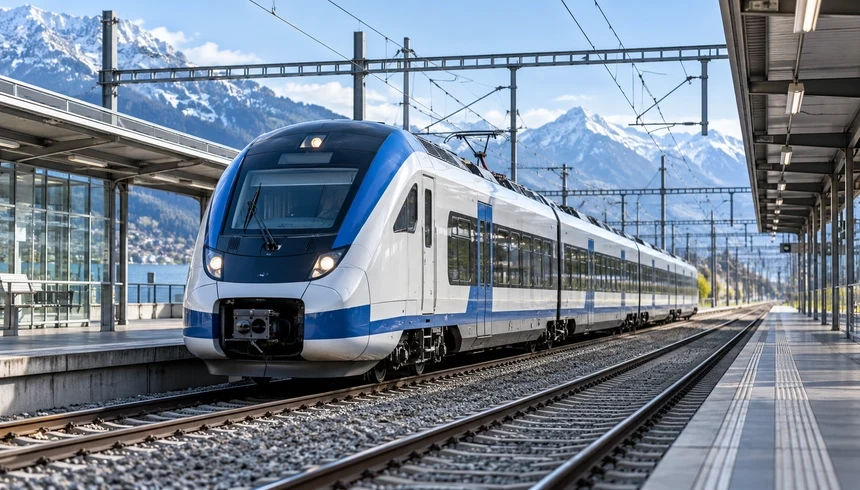
The Beijing–Shanghai High-Speed Railway connects Beijing and Shanghai and spans 1,318 km, making it one of China's major high-speed rail corridors. With operating speeds of up to 350 km/h, its traction power supply system provides the electrical power required for train operations and places stringent requirements on the reliability of communications for protection and control, four-remote services, fault information, and SCADA dispatching.
Sanwang Communication participated in the deployment of integrated automation systems for traction substations during Phases I and II of the Beijing–Shanghai High-Speed Railway project and Phase I of the Guangzhou–Zhanjiang High-Speed Railway project, providing industrial communication network infrastructure for related power applications.
Project Requirements
Adapt to Harsh Electromagnetic Environments: Traction transformers, feeders, and high-voltage equipment can generate harmonics, surges, and common-mode interference during operation, requiring strong EMC performance from communication equipment.
Ensure Reliable Communications for Critical Power Services: Protection and control, four-remote services, fault information, and SCADA dispatching require stable and reliable data transmission.
Adapt to Diverse Geographic Conditions: High-speed railway lines span multiple regions, requiring communication equipment to operate reliably under different temperature, humidity, and outdoor environmental conditions.
Support Existing-Line Upgrades: Some projects involve construction during operating-line maintenance windows, requiring efficient equipment deployment, configuration, and network upgrades.
Enable Unified Network Management: With numerous substations distributed along the railway, consistent network architecture, VLAN configuration, and network management are required to facilitate ongoing O&M.
Solution
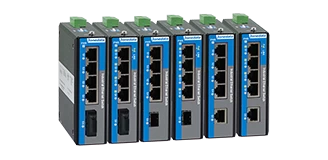
A total of 122 ICS6420-8GT8GS4XS-2P48 managed switches were deployed for the integrated automation systems of traction substations on Phases I and II of the Beijing–Shanghai High-Speed Railway and Phase I of the Guangzhou–Zhanjiang High-Speed Railway.
Two industrial Ethernet switches are deployed at each traction substation to support protection and control, four-remote services, fault information, SCADA dispatching, and other applications.
The switches support SW-Ring networking, IEEE 1588v2 hardware-based time synchronization, and QoS scheduling for power applications, providing reliable data transmission and time synchronization for critical power services at traction substations.
Recommended Cases
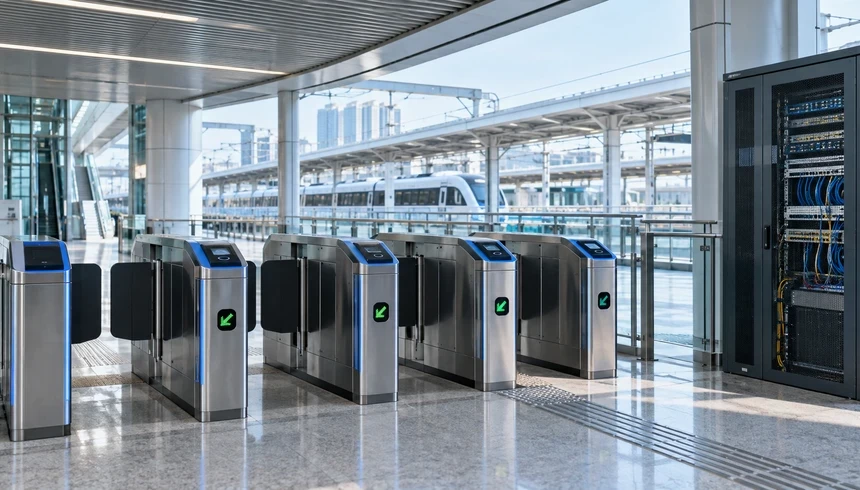
AFC System for Shaoxing Metro Line 1
Industrial Ethernet supports fare services, phased station deployment and cross-city data exchange.

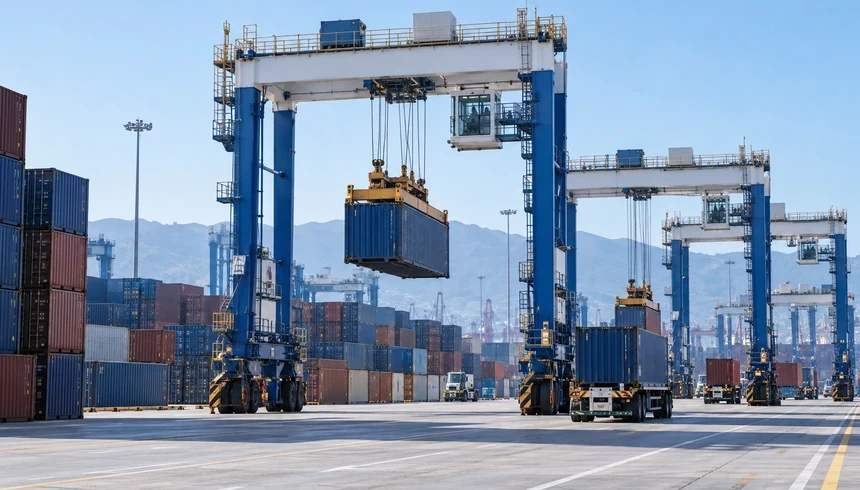
Remote Control of RTG Cranes at Beilun No. 1 Container Terminal, Ningbo-Zhoushan Port
Wired and wireless industrial networks support remote control of container terminal RTG cranes.
Onboard PIS System for Shenzhen Metro Line 14
An integrated onboard network supports passenger information and fully automated metro operations.
Intelligent Power Supply O&M System for Shanghai Metro Line 12
Industrial networking connects power monitoring, inspection robots and other metro maintenance systems.
Make an appointment with an expert to receive a free assessment of your industrial network needs