






















1 GW / 4 GWh Grid-Forming Energy Storage Power Station in Arong Banner
Redundant data and control networks support a gigawatt-scale grid-forming energy storage station.
Project Value

Supporting Large-Scale Device Connectivity
The ring and aggregation architecture enables stable connectivity and centralized aggregation for a large number of energy storage devices.

Ensuring Reliable Service Communications
Separate Data A/B and Control A/B Networks provide relatively independent communication channels for different services.

Enhancing Network Redundancy
The multi-ring architecture improves network resilience in the event of link failures or other network anomalies.

Supporting Gigawatt-Scale Energy Storage Applications
The project validates the engineering capabilities required to deploy industrial communication networks in large-scale energy storage applications.
Case Highlights
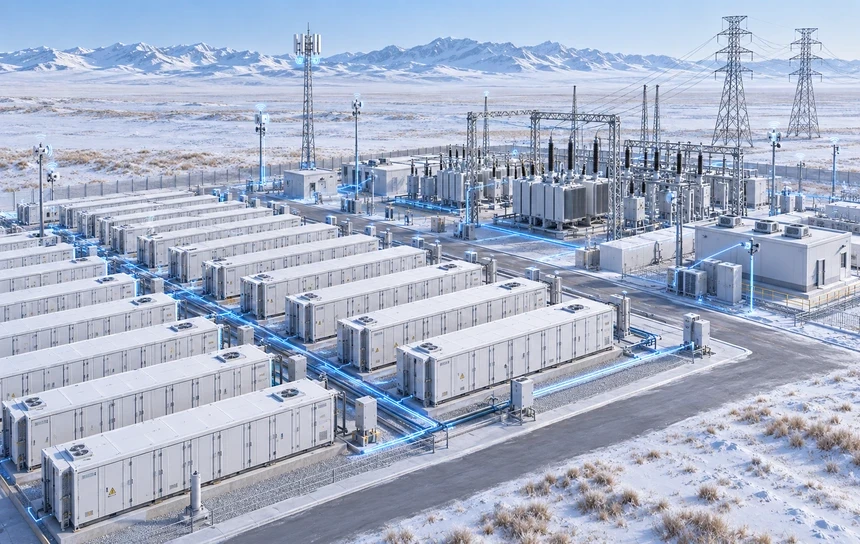
Project Background
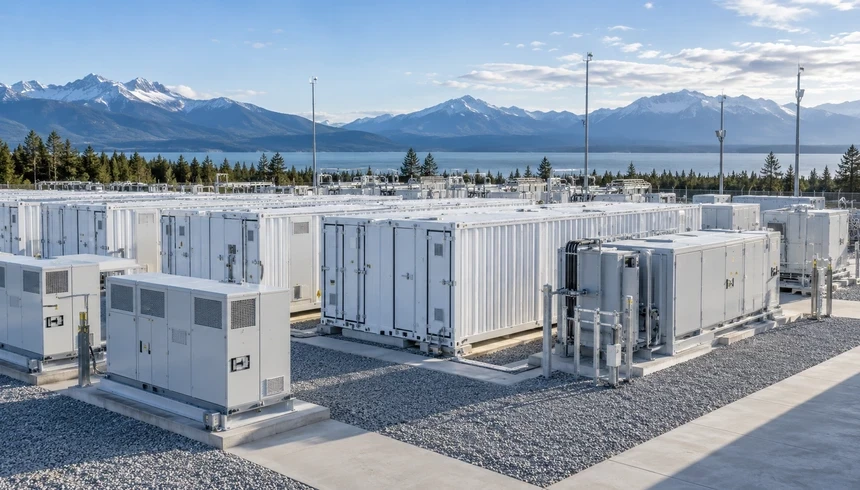
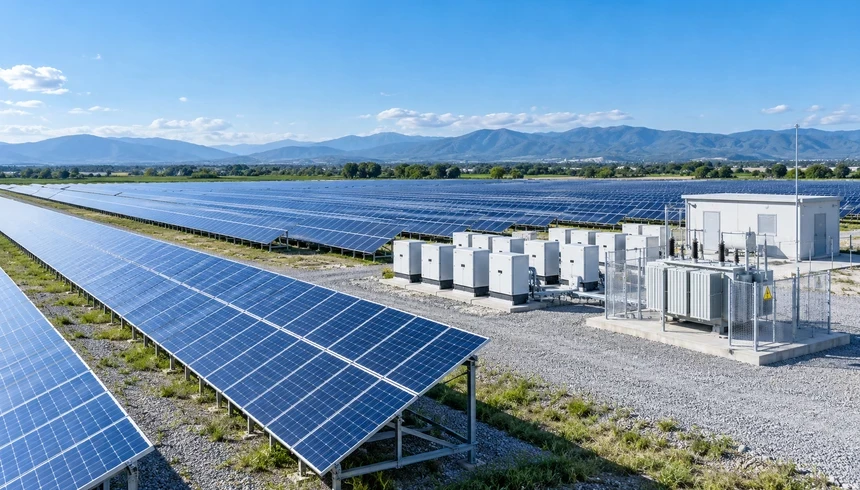
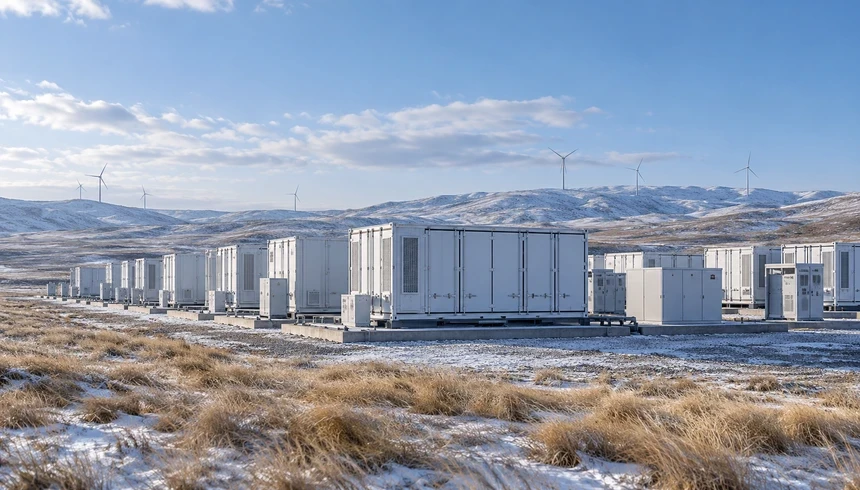
The 1 GW / 4 GWh grid-forming energy storage power station in Arong Banner was officially commissioned in December 2025. Directly connected to the 220 kV side of the 500 kV Arong Banner Substation, the project represents a significant implementation of gigawatt-scale grid-forming energy storage technology.
The large-scale deployment of energy storage equipment placed high demands on the industrial communication network in terms of device connectivity, network reliability, and on-site deployment and commissioning capabilities.
Project Requirements
Large-Scale Device Connectivity: With a large number of devices and an extensive network scale, the project required a stable and reliable industrial communication network.
Complex Network Architecture: The project adopted separate Data A/B Networks and Control A/B Networks, requiring independent service transport and reliable aggregation for different types of traffic.
Harsh Operating Environment: Located in Inner Mongolia, the project required industrial communication equipment capable of operating reliably under extremely cold conditions.
Tight Deployment Schedule: With a limited window between fault resolution and grid-connection testing, the network had to be quickly assessed, configured, integrated, and commissioned.
Solution
The project was divided into Project 1 and Project 2, with separate deployments for the Data A/B Networks and Control A/B Networks.
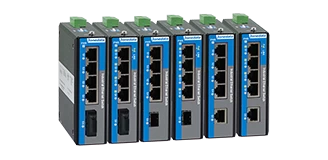
At the access layer, 100 IES6300SL industrial Ethernet switches were deployed. Every five switches installed in adjacent cabinets formed a ring network, resulting in a total of 20 ring networks. At the aggregation layer, ICS5428 switches and 28-port access switches were deployed to centrally aggregate multiple ring networks, with uplink connections transmitting data to upper-layer devices.
Through a hierarchical and segmented industrial network architecture, the solution provides reliable transport for both energy storage data and control traffic, supporting stable communications for the PCS subsystem.
Recommended Cases
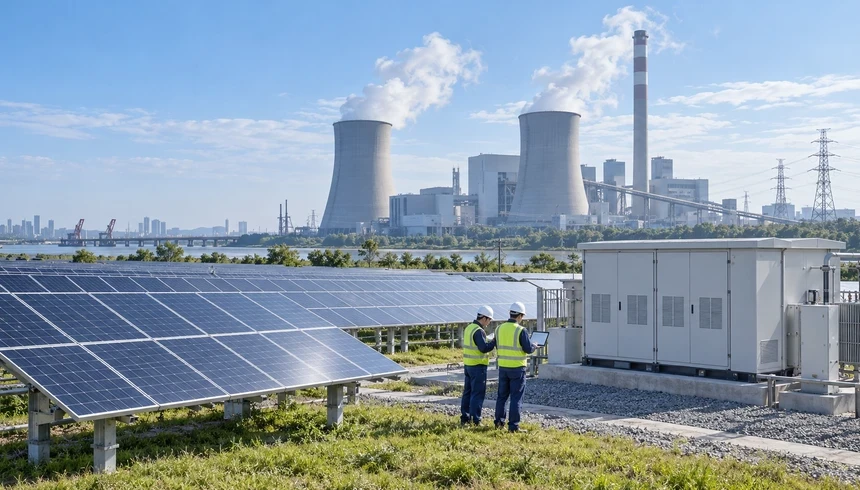
Wuhan Yangluo Power Plant Solar PV Data Acquisition Project
Multi-protocol data acquisition connects photovoltaic field equipment to centralized monitoring.

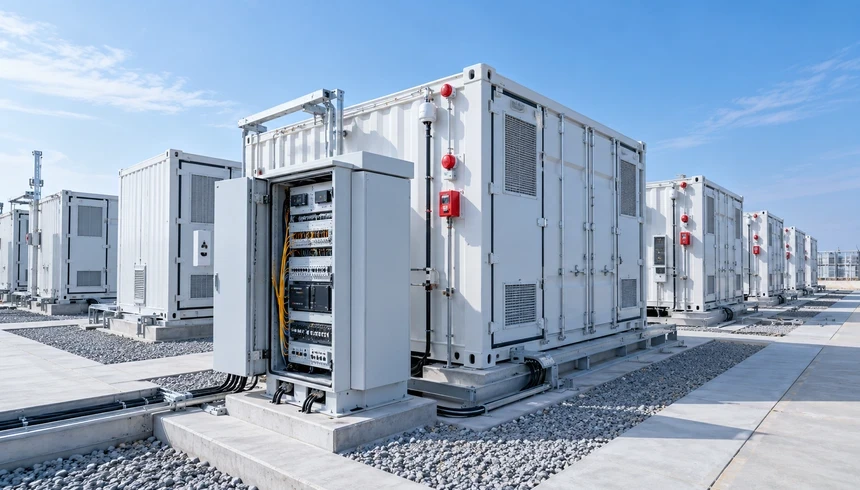
200 MW Energy Storage Fire Protection Project in Dongying
Fiber communication links support reliable fire detection across energy storage containers.
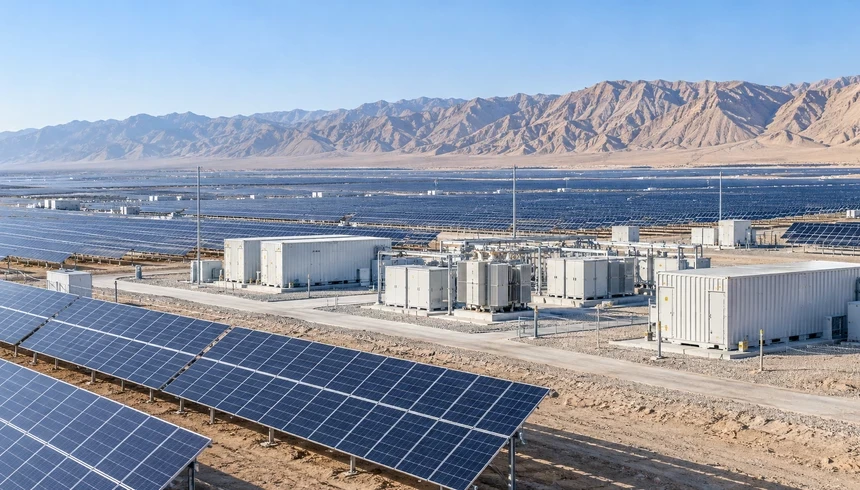
Xinjiang Turpan 1,000 MW Solar PV Project
Industrial networking supports distributed photovoltaic equipment across a large desert solar installation.
2 GWh Energy Storage Project in Huade County, Inner Mongolia
Segmented industrial Ethernet networks support large-scale energy storage in demanding conditions.
Make an appointment with an expert to receive a free assessment of your industrial network needs