


















2 GWh Energy Storage Project in Huade County, Inner Mongolia
Segmented industrial Ethernet networks support large-scale energy storage in demanding conditions.
Project Value

Multi-Service Network Segmentation
Data and control services are carried over separate networks, providing reliable communications support for stable energy storage system operation.

Enhanced Network Reliability
The A/B dual-network architecture and redundant link design improve redundancy for critical communication services.

Adaptation to Complex Industrial Environments
Industrial-grade communication equipment meets the environmental requirements of energy storage sites, including extreme temperatures, blowing sand, and electromagnetic interference.

Supporting Large-Scale Deployment
The deployment and commissioning of approximately 400 industrial Ethernet switches provide a reliable communications foundation for large-scale independent energy storage power stations.
Case Highlights
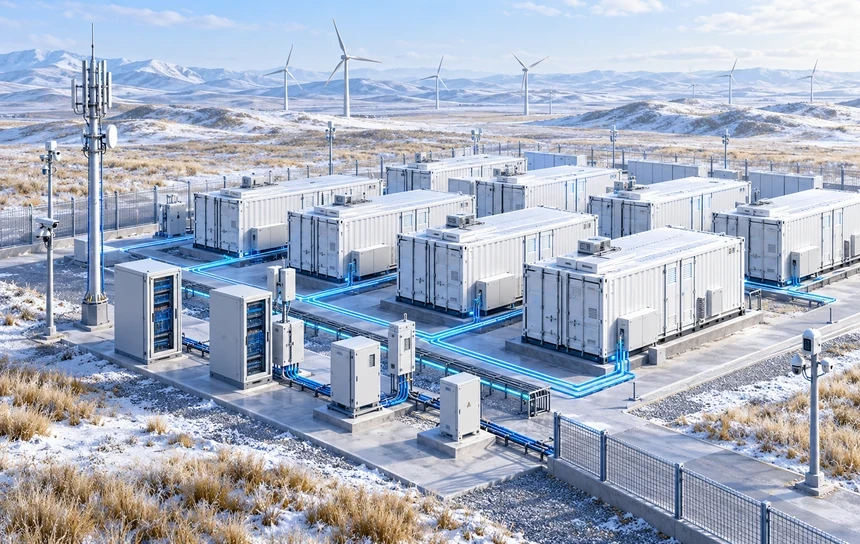
Project Background
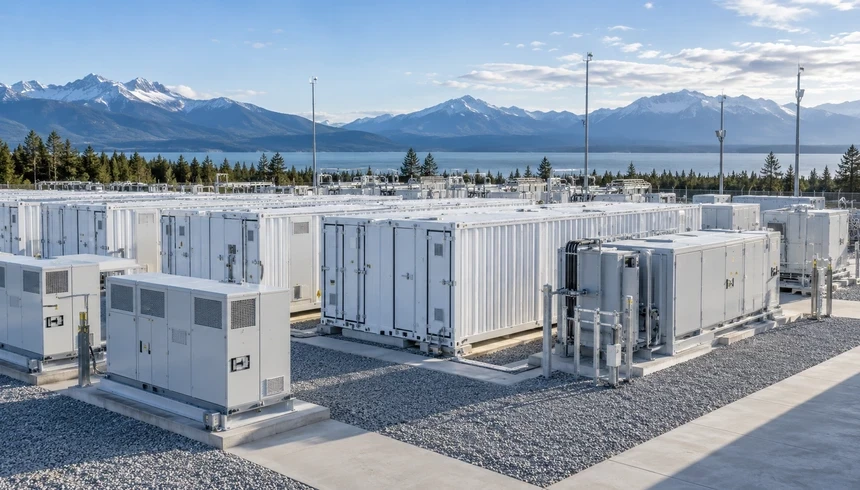
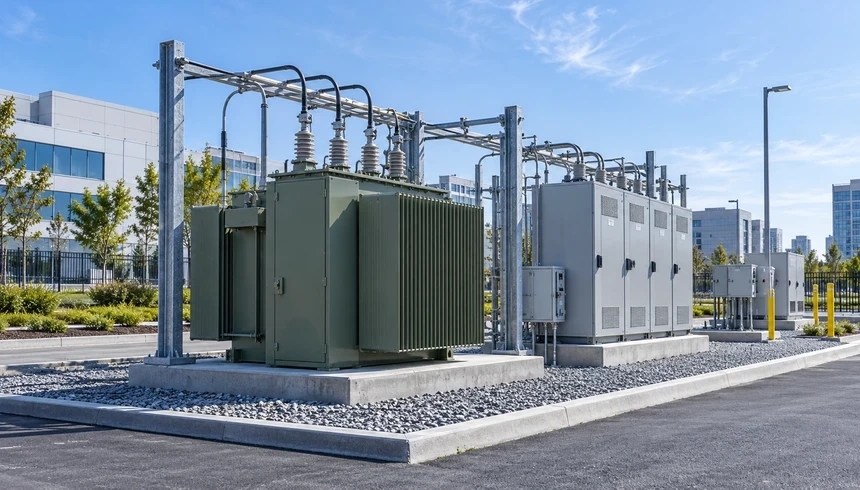
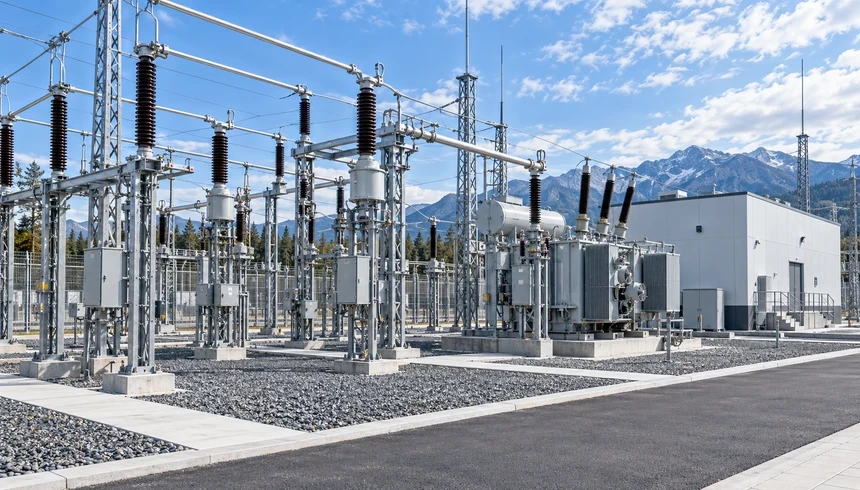
The 500 MW / 2,000 MWh independent energy storage power station in Huade County, Ulanqab, Inner Mongolia, relies on an industrial communication network to connect key equipment including PCS converters, the Energy Management System (EMS), and the Battery Management System (BMS), providing communication support for data acquisition, control, and system management.
Project Requirements
Strong Electromagnetic Interference: The complex electromagnetic environment at the energy storage site placed high demands on the anti-interference capability and operational stability of industrial communication equipment.
Extreme Temperature Conditions: Temperatures at the project site can fall below -40°C in winter, while strong sunlight and blowing sand are common in summer. The compact space inside energy storage containers also required equipment with a wide operating temperature range and strong environmental adaptability.
Large-Scale Device Deployment: The project involved approximately 400 industrial Ethernet switches, requiring equipment installation, configuration, system integration, and commissioning.
Challenging Remote Operations and Maintenance: Due to the remote location of the project, on-site fault handling involved significant costs, creating a need for improved network maintainability.
Solution
The project adopted a four-network architecture, with the Data A/B Networks and Control A/B Networks deployed separately. Dual redundant links were also implemented to enhance network reliability.
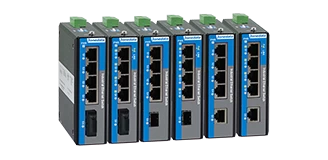
At the aggregation layer, four IES5328 industrial Ethernet switches were deployed. Each switch connects to the data/control sub-aggregation equipment in one of four zones, providing centralized aggregation of communications from energy storage devices across each area and establishing a clear hierarchical network architecture.
Recommended Cases
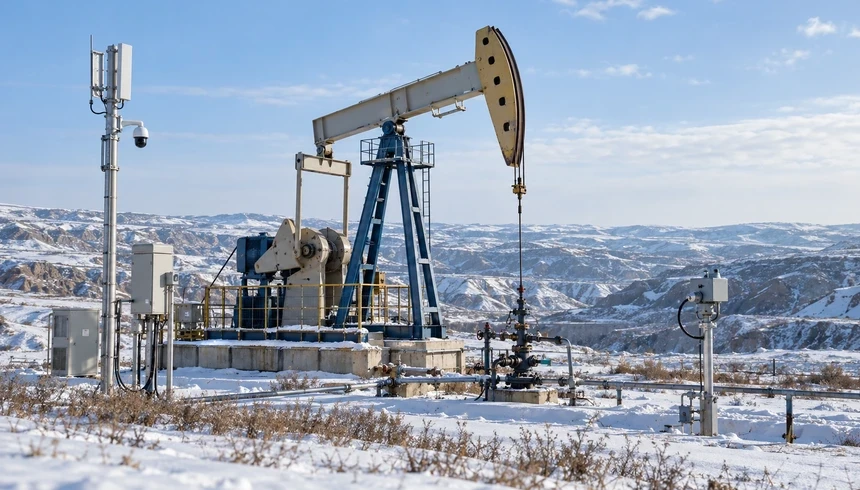
Digital Oil Well Development Project in Maozhuangke Area, Xingzichuan Oil Production Plant, Yanchang Oilfield
Cellular communication connects oil well production data and video to centralized monitoring systems.

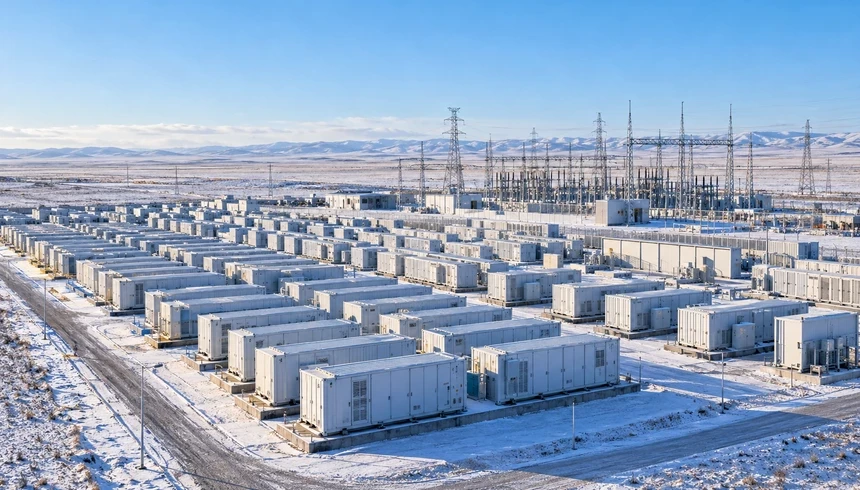
1 GW / 4 GWh Grid-Forming Energy Storage Power Station in Arong Banner
Redundant data and control networks support a gigawatt-scale grid-forming energy storage station.
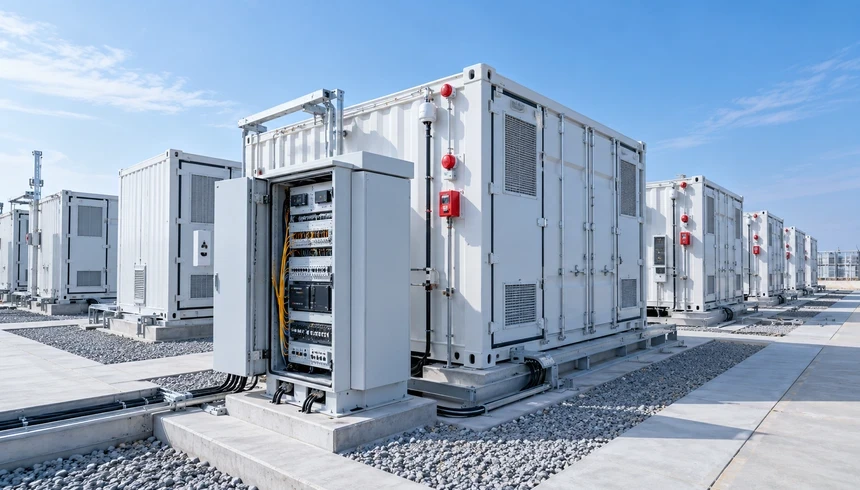
200 MW Energy Storage Fire Protection Project in Dongying
Fiber communication links support reliable fire detection across energy storage containers.
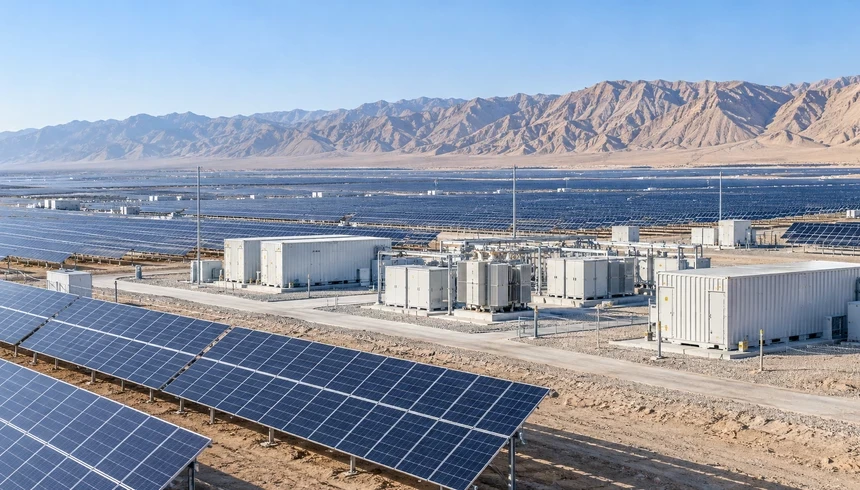
Xinjiang Turpan 1,000 MW Solar PV Project
Industrial networking supports distributed photovoltaic equipment across a large desert solar installation.
Make an appointment with an expert to receive a free assessment of your industrial network needs