












Onboard PIS System for Porto Metro, Portugal
Industrial onboard networking supports passenger multimedia services and flexible train coupling.
Project Value
Support Onboard Multimedia Services
Provides unified networking for PIS, video surveillance, APs, passenger counters, and other services, establishing a reliable network for onboard information services.
Enhance Network Redundancy
The combination of link aggregation and hardware bypass improves the reliability of critical communication links.
Enable Onboard Service Isolation
VLAN-based segmentation of subsystem services reduces network interference in complex multi-service environments.
Support Flexible Train Coupling
Network topology discovery, address configuration, and routing adjustment mechanisms improve network adaptability during train coupling and reconfiguration.

Meet Overseas Onboard Application Requirements
Products and network architectures are adapted to European rail transit standards and project-specific requirements.
Case Highlights
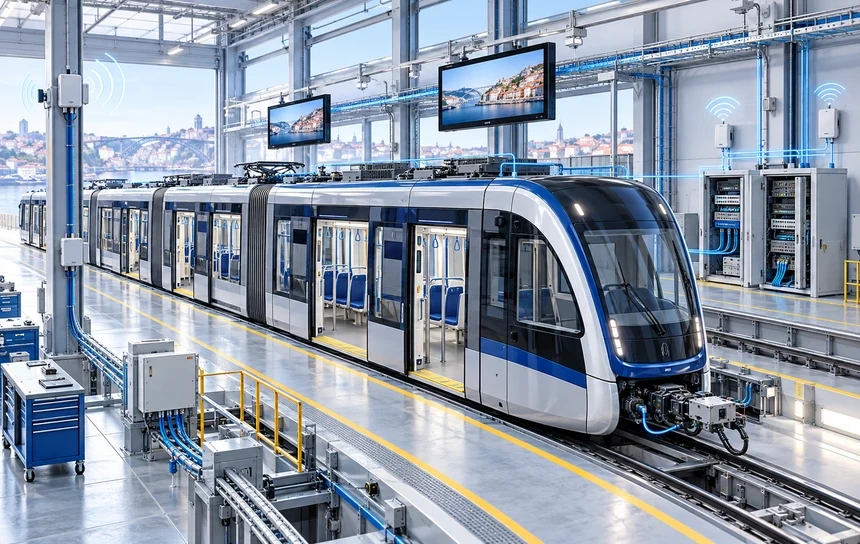
Project Background
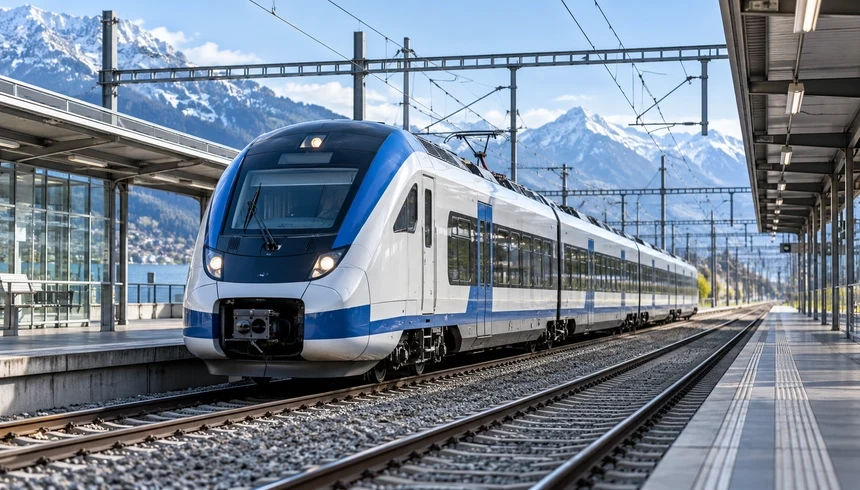
Porto Metro is an important urban rail transit system in Portugal, with a total network length of approximately 67 km comprising multiple light rail and underground lines. As the fleet expands and the rail network continues to develop, the onboard PIS system requires enhanced capabilities for multimedia service transmission, train-to-ground communications, and train coupling.
Sanwang Communication participated in the deployment of the onboard PIS system for Porto Metro, adapting its products and network architecture to the requirements of overseas rail transit applications.
Project Requirements
Multimedia Service Convergence: The onboard network needs to support multiple services, including passenger information, audio, and video, ensuring reliable operation of onboard displays and passenger information services.
Compliance with Rail Transit Standards: Equipment needs to meet relevant rail transit standards, including EN 50155, EN 50121, IEC 61373, and EN 45545.
Support Train Coupling: After different trainsets are coupled, the network needs to automatically identify the network topology and dynamically adjust addressing and routing information.
Adapt to Complex Communication Requirements: The project involves data exchange among onboard systems, train-to-ground networks, and multiple subsystems, placing higher demands on switch functionality and network architecture.
Solution
The backbone network adopts a combination of link aggregation and hardware bypass.
Core equipment, including PIS hosts, video surveillance hosts, and servers, is connected to nearby carriage controller switch boards. Cameras, APs, passenger counters, and other terminals are connected through PoE ports, integrating data transmission and device power supply.
VLANs are used to isolate services across multiple subsystems and train-to-ground communication applications, reducing mutual interference among different types of traffic.
In addition, based on the network topology concepts defined in IEC 61375, the solution supports network topology discovery and automatic train consist configuration after train coupling. When two trainsets are coupled, the PIS host transmits data containing location information to dynamically update the topology of the interconnected gateways and automatically adjust IP addressing and routing information.
Recommended Cases
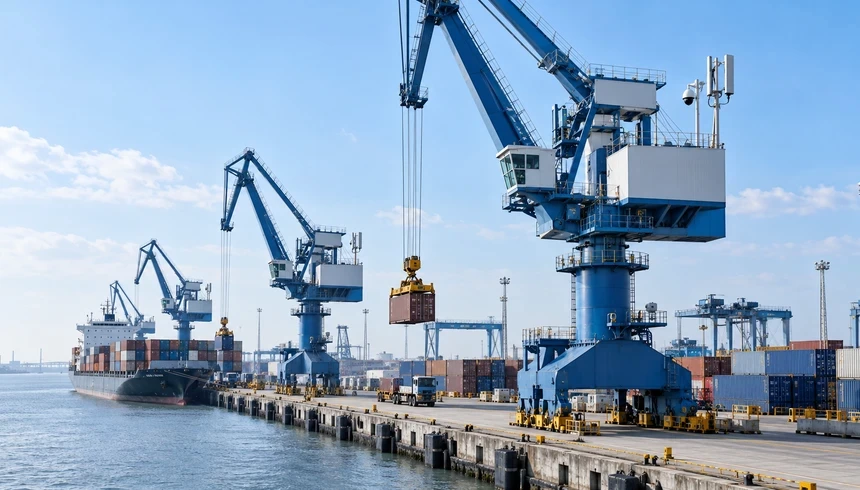
Wireless Communication for the Intelligent Remote Monitoring System of Port Cranes at Nantong Port
Industrial wireless links maintain remote video and monitoring connectivity as port cranes rotate.

Integrated Automation System for Traction Substations on the Beijing–Shanghai High-Speed Railway
Redundant industrial communication supports protection, control and SCADA across railway traction substations.
Onboard PIS System for Wuxi Metro Line S1
A redundant onboard Ethernet network carries multimedia and passenger information services.
Onboard PIS System for Shenzhen Metro Line 14
An integrated onboard network supports passenger information and fully automated metro operations.
Make an appointment with an expert to receive a free assessment of your industrial network needs